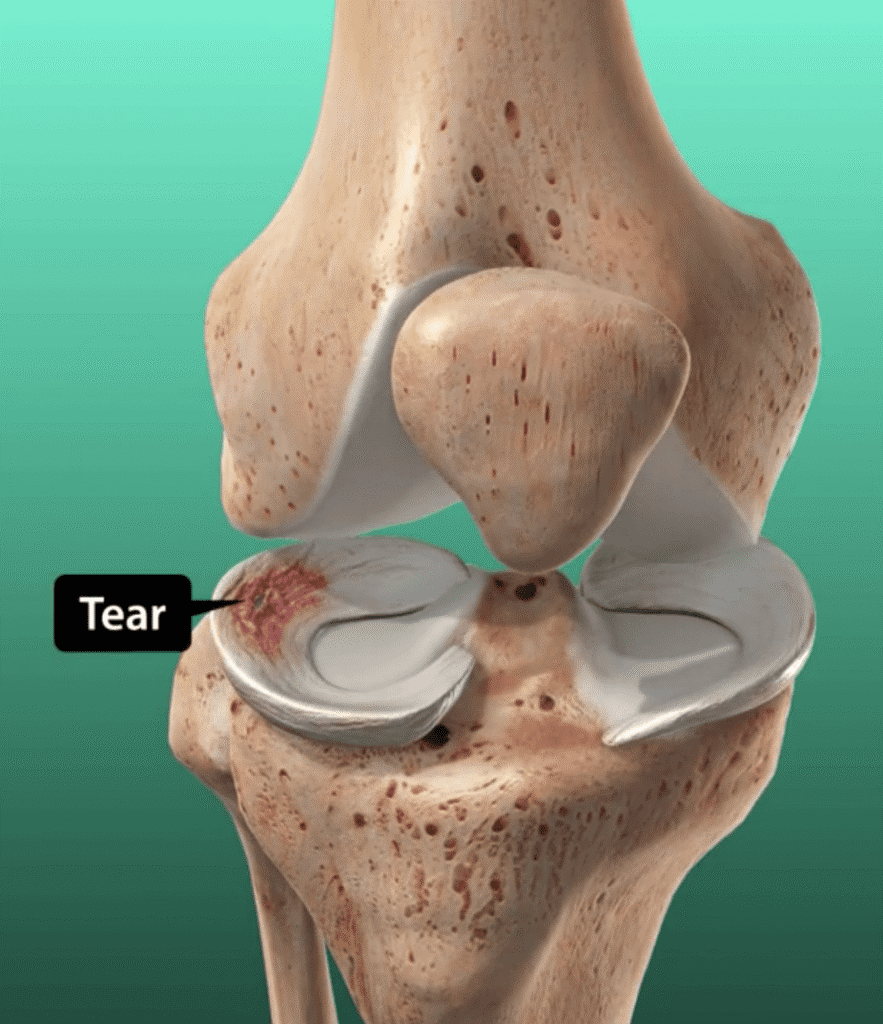
Meniscus surgery treats a torn cartilage pad in the knee, most commonly through arthroscopy (a minimally invasive technique) using small incisions. The goal is either to repair the tear with sutures by stitching it back together or to perform a partial meniscectomy, where only the damaged portion is trimmed away. The choice of procedure depends on tear size, location (red zone with good blood supply vs. white zone), patient age, and activity level.
Types of Surgery
- Meniscus Repair: Sutures are used to sew the torn pieces back together. This option is ideal for tears in the red zone where blood supply supports healing.
- Partial Meniscectomy: The damaged portion of the meniscus is removed, preserving as much healthy tissue as possible.
- Meniscus Transplant: A donor meniscus is implanted. This is a less common procedure, typically reserved for younger patients with extensive meniscal damage.
The Procedure (Arthroscopy)
- Anesthesia: Regional (nerve block) or general anesthesia is administered.
- Incisions: Two to three small cuts (ports) are made around the knee.
- Arthroscope & Tools: A camera (arthroscope) and surgical instruments are inserted through the ports.
- Repair / Removal: The surgeon views the tear on a monitor and either stitches the meniscus or trims the damaged part.
- Closure: Instruments are removed, and incisions are closed with sutures.
Recovery
- Duration: Recovery can range from a few weeks to several months, depending on the type of surgery performed.
- Support: Crutches and/or a knee brace may be required during early recovery.
- Rehabilitation: Physical therapy focusing on quadriceps strengthening and neuromuscular training is essential for optimal recovery.
Related Images